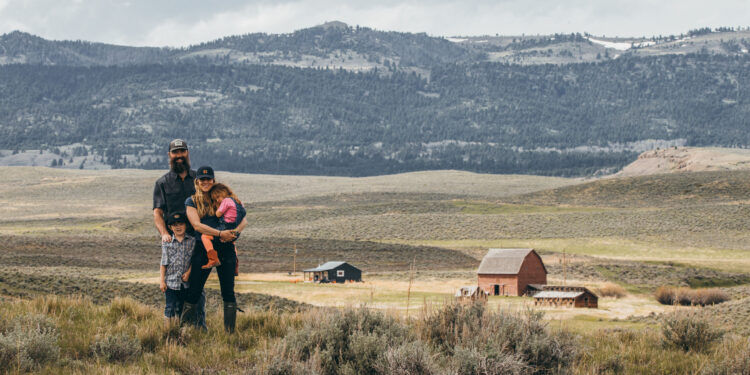
When Matt Skoglund decided to leave his career in law and policy at the Natural Resources Defense Council, he wasn’t walking away from conservation. He was walking toward it. Just in a different way than most people might expect.
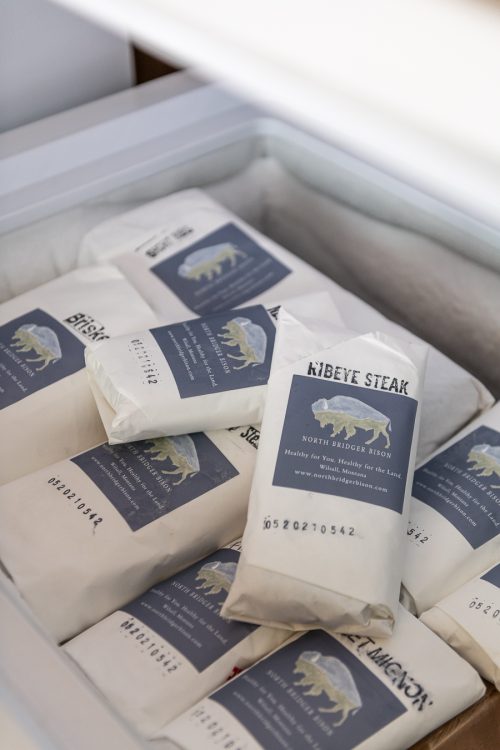
In 2018, Matt and his wife Sarah founded North Bridger Bison from scratch in Montana’s Shields Valley. First-generation ranchers with no agricultural background and a deep conviction that regenerative ranching was one of the most powerful conservation tools available.
North Bridger Bison was the first Audubon-certified bird-friendly bison ranch in Montana and today is a working example of what it looks like when deep conservation values and ranching values are one and the same.
Matt is also a member of WSE’s board of directors, and his story is exactly why this work matters.
From Policy to Pasture
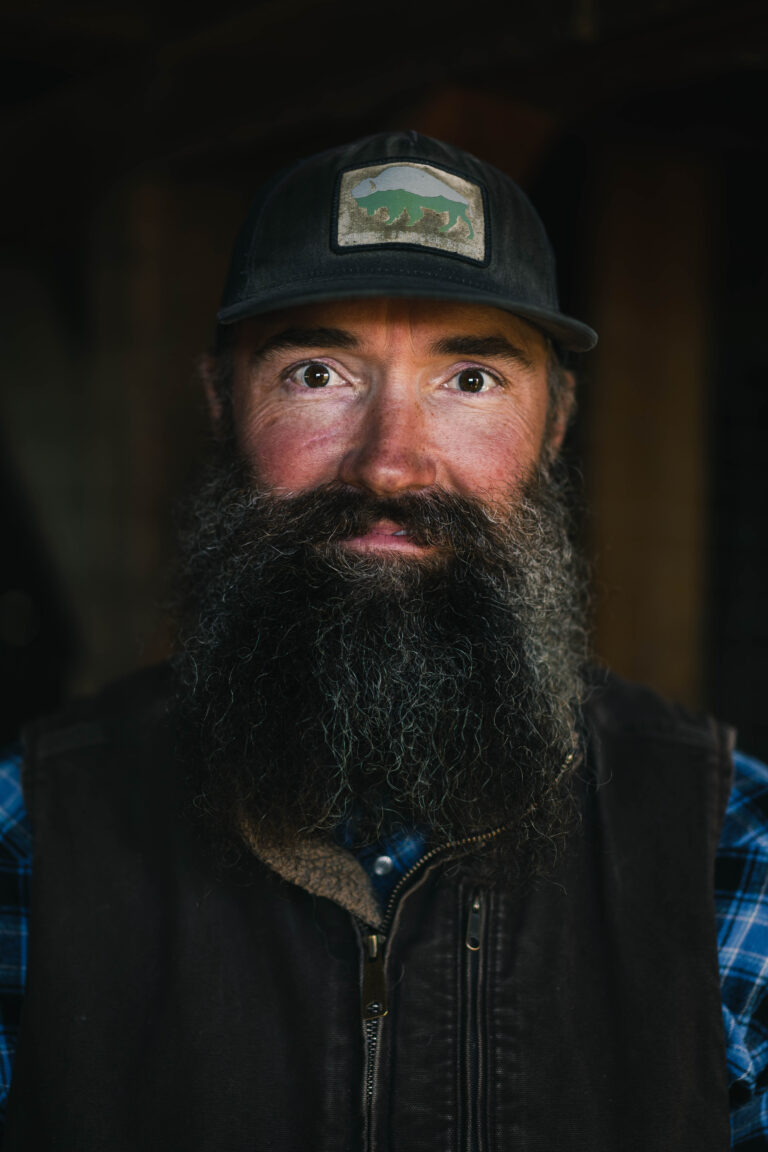
For ten years, Matt worked on wildlife policy and conservation, mainly bison, with the NRDC out of Livingston and Bozeman. He fell in love with bison as a species, their ecological role, their history, their sheer beauty, and over time, began to crave something more tangible.
“I wanted to do something that was entrepreneurial, land-based, conservation-based,” he says. “Something you could touch, smell, and feel.”
When he began learning about regenerative ranching, it started to click into place.
“Everybody has to eat. If you’re lucky, you get to eat three meals a day. Factor that out across billions of people on the planet, and you realize very quickly that the production of food has enormous environmental and social impacts.” Matt wanted to make a difference for the better, improving the land day after day, year after year. From the soil to the plants, to the bison, to the wildlife and pollinators.
It was always going to be bison. He had spent a decade falling in love with the species and knew that every bison herd in existence contributes to the long-term conservation of an animal that once numbered in the tens of millions across North America.
The Shields Valley was an easy choice. Matt had been coming up to Flathead Pass to cut firewood for years, and it held a special place in his heart. Coming in without a ranching background could easily have been a disadvantage, but mentors along the way encouraged Matt that sometimes, “having no background in agriculture is actually a huge advantage because you have no bad habits to unlearn.” As first-generation ranchers, he and Sarah get to make every decision based on one question: what’s best for the bison, best for the land, and best for the business?
What Regenerative Actually Looks Like
And no, not the buzzword that has been used by big corporations to greenwash their products, but on the ground, in practice. For him, regenerative isn’t a label. It’s a mindset and a long-term commitment to making the landscape better every year, for generations to come.
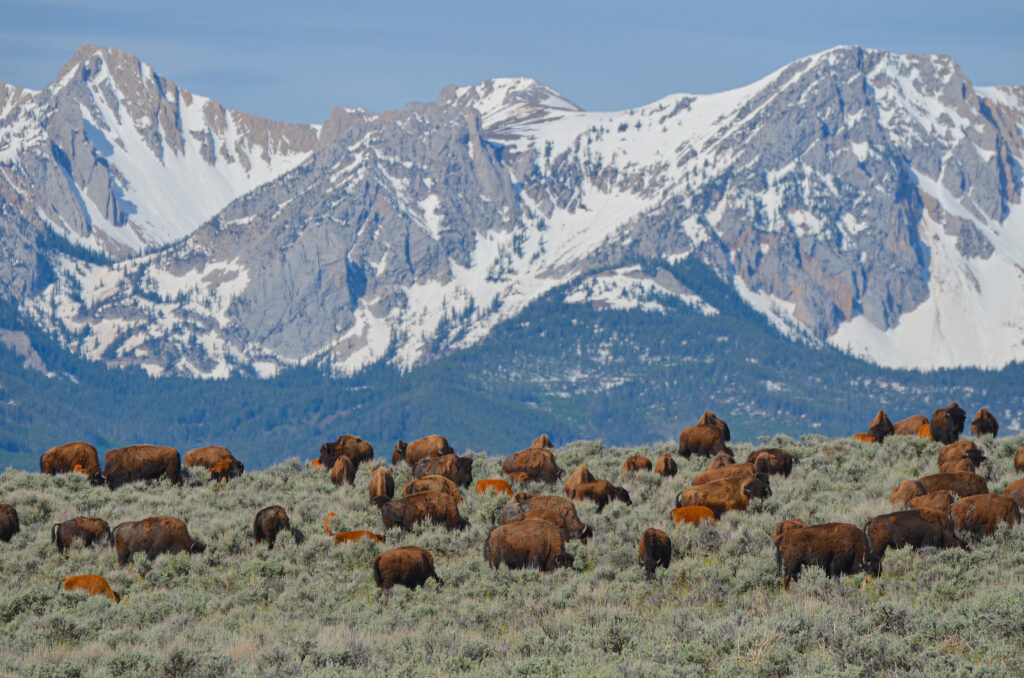
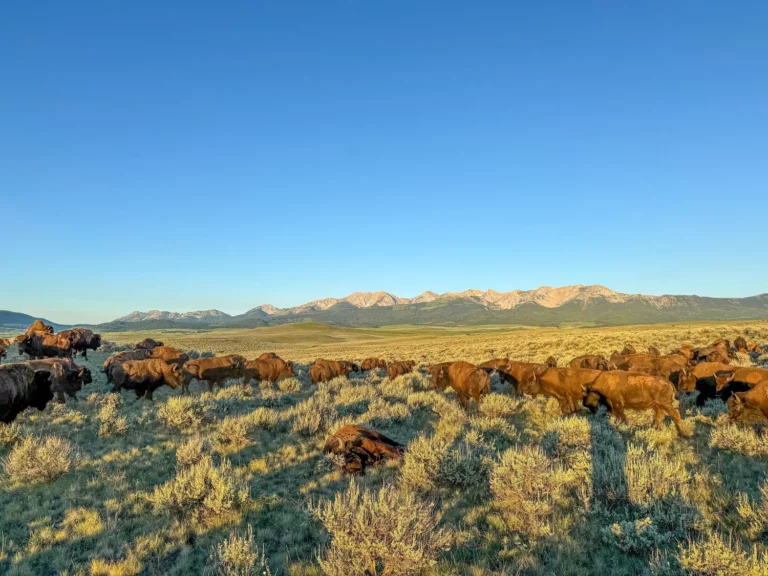
At North Bridger Bison, that means adaptive management grazing; the ranch is cross-fenced into multiple pastures, the bison move as one herd year-round, and every pasture not currently being grazed is resting and recovering. It’s biomimicry: mimicking the way bison have moved across the West for thousands of years.
It means no chemicals. No herbicides, pesticides or fungicides. Which means healthier, resilient soil, which means insects, which means birds, small mammals, raptors, coyotes, foxes, pronghorn. The whole food chain, intact and thriving.
It means being carnivore-friendly. “When we see a coyote, we take a picture of it,” Matt says. “They have their ecological role to play. I love them, it’s free rodent control.”
It means encouraging wildflowers, shrubs, and forbs to grow, even when mowing them down would mean more grass and more profit. Those plants are habitat for songbirds, bees, butterflies, pronghorn, elk, and deer. The wetlands and ponds on the ranch, which could be drained for more pasture, stay wet. Sandhill cranes nest there and great blue herons fly through in the mornings.
And it means field harvesting the bison himself. Which brings us to the part of Matt’s story that, once you hear it, you don’t forget it.
The Gentle Giant
Matt has field harvested hundreds of bison over the years. He’ll tell you that this process of driving out to the pasture, a single shot at close range, instant death in the animal’s home landscape, is the most ethical, humane way to produce meat he can imagine.
“Death can be beautiful,” he shares. “You can’t have life without death. And in our case, it can be done with so much dignity.”
He believes deeply in transparency. In letting customers see exactly where their food comes from and how it’s raised and harvested. “Eat with your eyes wide open,” is a phrase he comes back to often. But there was one bison that stopped him in his tracks.
The Gentle Giant arrived at the ranch as a young breeding bull. Over the years, he grew into something spectacular. Matt started calling him the Gentle Giant because of his demeanor: sweet, calm, massive, with big soft eyes. He fell in love with him, not intentionally, but completely. When it came time to retire the Gentle Giant for the sake of genetic diversity, Matt knew it was the right decision. He also knew he was absolutely dreading it.
“It was slowly eating me alive. I avoided it for as long as I could.”
When the day finally came, it was a moment that Matt has never forgotten and never will.
The bull had separated himself from the herd. He turned and stared at Matt. And in that moment, Matt felt that the Gentle Giant was telling him: It’s okay. I know it’s my time. You have my permission. No pain, no stress. Standing on his homeland, full belly of grass, his herd nearby.
“I will think about that till the day I die,” he shares. “It was just a special thing, all the way around.”
If You Love Montana, You Better Love Ranching
Matt put a conservation easement on the entire North Bridger Bison ranch with Gallatin Valley Land Trust, protecting it from development permanently. He didn’t do it reluctantly. He did it because it aligned perfectly with why he started the ranch in the first place.
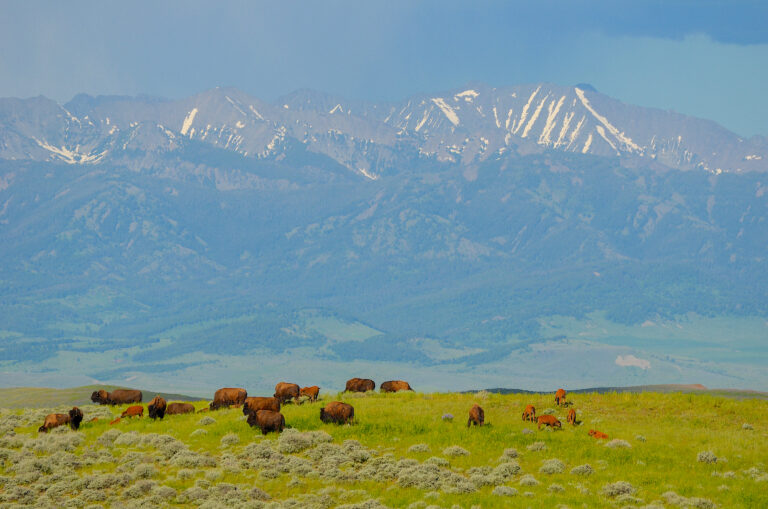
His ranch is home to pronghorn, mule deer, raptors, songbirds, waterfowl, sandhill cranes, and the full cast of predators. Since the bison arrived, he’s seen more plant diversity, more wildflowers and forbs, more raptors than ever before. The science backs him up: land grazed by bison is measurably more biodiverse than land grazed by cattle or left ungrazed entirely.
When Matt talks about why any of this matters to people who don’t ranch, he says, “If you love Montana, you better love ranching. We have millions and millions of acres of private ranch land providing all of this open space, wildlife habitat, bird habitat. When you’re driving around seeing these beautiful wide open landscapes, it’s ranches that are providing that.”
That’s exactly the belief at the heart of WSE’s work. Matt has been a board member for several years, but his relationship with the organization goes deeper than governance. North Bridger Bison has experienced the value of WSE firsthand, benefiting especially from shared knowledge, educational and networking programs like the Bull Sessions and Expanding Markets Conference, and a community of producers asking the same hard questions. “When I get an email from WSE, I always read it,” he says. “WSE has significantly increased my knowledge, and I’ve met people through WSE whose relationships have been really valuable.”
WSE exists to make sure ranchers like Matt can keep doing what they do, while staying on the land, managing for biodiversity, and proving that environmental values and ranching values don’t just coexist. They depend on each other.